
What This Article Covers
In this article, we will look at the common causes of road accidents, the risks of regional driving, practical ways to protect other road users, and how driver education encourages safer decisions.
Road Safety Is More Than Following the Rules
The recent Melbourne Cup weekend was a tragic reminder of how quickly lives can change on Australian roads. Eight people lost their lives in separate crashes across Victoria, including four incidents involving motorcycles. Families who expected to spend the long weekend together were instead left grieving. Such incidents raise an important question: are drivers doing enough to keep themselves and others safe? Road safety in Australia depends on more than knowing traffic rules. It requires patience, sound judgement, and awareness of other road users. It also highlights the importance of quality driver education, where a professional Driving Instructor Course can help prepare instructors to teach safer driving habits and responsible decision-making.
Why Do Serious Road Accidents Continue to Happen?
Most drivers know that speeding, fatigue, and distraction are dangerous. Yet these behaviours continue to put lives at risk. Sometimes, the problem is overconfidence. Drivers who have spent years behind the wheel may become too comfortable with familiar routes and overlook potential hazards. Others take unnecessary risks because they are running late, frustrated by traffic, or eager to overtake.
Victoria Police reported that speeding had contributed to 29% of road fatalities in Victoria in 2026, before the Melbourne Cup weekend. This includes driving too fast for conditions, not just exceeding the posted speed limit. Understanding these behaviours is important, but recognising when we are making unsafe decisions is what helps change them.
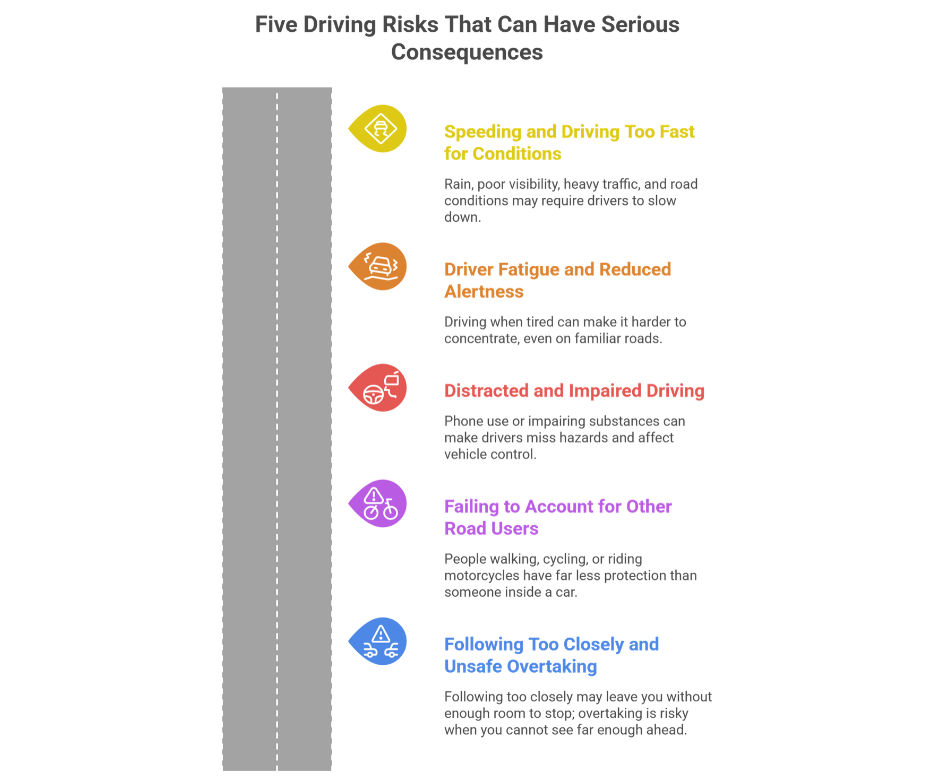
Five Driving Risks That Can Have Serious Consequences
Everyday driving habits can make a bigger difference to road safety than many people realise.
1. Speeding and Driving Too Fast for Conditions
A posted speed limit does not mean it is always safe to travel at that speed. Rain, poor visibility, heavy traffic, and road conditions may require drivers to slow down. Travelling at the posted limit may still be unsafe on a wet road or around a sharp bend. At higher speeds, drivers have less time to respond to hazards, and a collision is more likely to cause serious injuries.
2. Driver Fatigue and Reduced Alertness
Driving after a poor night's sleep or starting a journey when already tired can make it harder to concentrate, even on familiar roads. Frequent yawning, heavy eyelids, drifting between lanes, and difficulty remembering the last few kilometres are the early warning signs of driver fatigue. On longer trips, plan a break at least every two hours. If you start feeling tired, pull over somewhere safe rather than trying to push through.
3. Distracted and Impaired Driving
A quick glance at a phone or navigation screen can mean missing a vehicle braking ahead, a changing traffic light, or someone entering the road. Alcohol and other impairing substances can make it harder to judge distances, respond to hazards, and control a vehicle. Keep your phone out of reach and arrange alternative transport if you are affected by alcohol or other impairing substances.
4. Failing to Account for Other Road Users
People walking, cycling, or riding motorcycles have far less protection than someone inside a car, so even a relatively low-speed collision can have serious consequences. Before changing lanes, check mirrors and blind spots. Slow down near pedestrian crossings, look carefully at intersections, and give motorcyclists adequate space. A pedestrian may be watching traffic in the opposite direction, while a cyclist may be difficult to see in a blind spot. Check before moving or turning.
5. Following Too Closely and Unsafe Overtaking
If the vehicle ahead brakes suddenly, following too closely may leave you without enough room to stop. An overtaking manoeuvre is just as risky when you cannot see far enough ahead or judge the available gap properly. Leave enough space to stop comfortably, and wait for a clear opportunity before overtaking. Reaching your destination a little later is better than taking an unnecessary risk.
Why Regional Roads Require Extra Caution
Driving outside metropolitan areas comes with different challenges. Regional roads may have sharp bends, limited lighting, changing surfaces, narrow shoulders, and longer stretches without convenient rest stops. Drivers may also encounter wildlife, agricultural vehicles, and oncoming traffic on undivided roads. Higher travel speeds can make mistakes particularly dangerous. Before overtaking, make sure you have a clear view and sufficient space to complete the manoeuvre safely. Reduce speed before bends, plan rest stops, and avoid driving when tired. A few extra minutes on the road are worth far more than taking an unnecessary risk.
How Better Driver Education Can Help Prevent Road Accidents
Learning to operate a vehicle is only the beginning of becoming a responsible driver. Drivers also need to recognise hazards, anticipate other road users' movements, and make safe decisions under pressure. Professional driving instruction by trained instructors helps learners develop these skills through structured lessons and supervised practice. It also gives them opportunities to understand situations they may not encounter during routine driving.
At the Academy of Road Safety, the TLI41225 Certificate IV in Motor Vehicle Driver Training prepares aspiring driving instructors with the knowledge and skills needed to teach others. Better-equipped instructors can play an important role in developing safer driving habits among future motorists.
Safer Roads Start with Better Driving Decisions
Every time we get behind the wheel, our decisions affect more than just our own safety. Someone else's family, journey, or future may depend on the choices we make. If you are interested in contributing to safer roads through professional driver education, explore the TLI41225 Driving Instructor Course at the Academy of Road Safety and learn about the pathway to becoming a qualified driving instructor.
Frequently Asked Questions
Q1. What are the main causes of road accidents in Australia?
A: Common contributing factors include speeding, fatigue, distraction, impaired driving, and unsafe driving decisions.
Q2. How can drivers prevent road accidents?
A: Follow speed limits, maintain safe distances, avoid distractions, stay alert, and adapt your driving to road conditions.
Q3. Why are regional roads more dangerous?
A: Higher travel speeds, limited lighting, undivided roads, and roadside hazards can increase the risk of serious crashes.
Q4. How does driver education improve road safety?
A: It helps drivers develop hazard perception, defensive driving skills, road awareness, and responsible decision-making.