
While we all love long drives and late-night rides, they also have their fair share of challenges. Driver fatigue is one such challenge that can silently creep up on you and catch you unaware. It’s also considered one of the most dangerous conditions a driver can face. But don’t mistake feeling a little sleepy with the creeping drowsiness of fatigue that can affect concentration, reaction time, and judgment. Whether you’re a seasoned driver or a novice, recognising the early signs of driver fatigue and managing them promptly is essential to staying safe. For both drivers and driving instructors, understanding how to spot fatigue and respond effectively is a vital part of driving education. That’s why most driving schools and instructors trained under the TLI41225 Driving Instructor Course always teach students how to recognise the signs of driver fatigue. Let’s look at the most common signs of fatigue and practical ways to handle them.
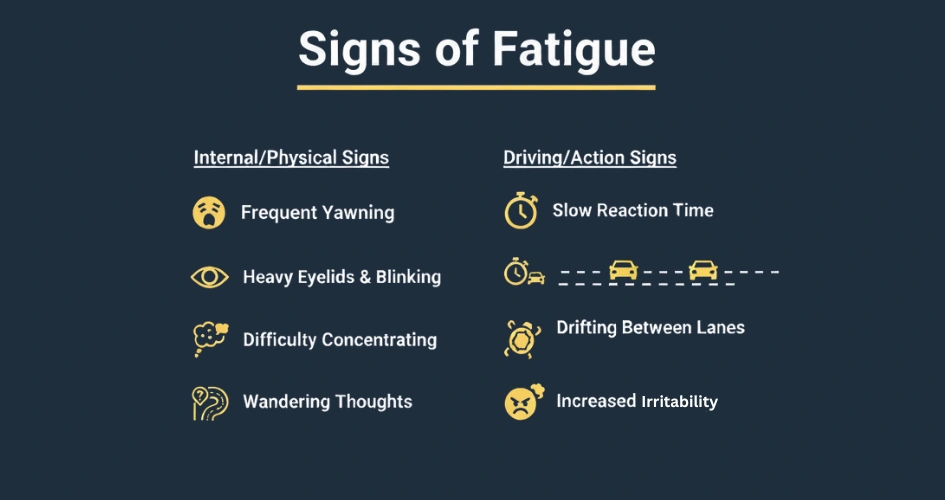
Frequent Yawning
Yawns tend to come when you’re feeling sleepy and bored. While they signal your struggle for alertness, they’re actually the body’s attempts to stay alert. So, when you catch yourself yawning repeatedly while driving, take it as your body’s signal to act. Ask any professional instructor trained through a Driving Instructor Course and they’ll tell you that recognising and responding to fatigue is a key defensive driving skill. At such a time, you should pull over at a safe rest stop for a break, stretch your legs, drink water or do something to refresh yourself. If possible, avoid caffeine as it only temporarily boosts alertness but cannot reduce tiredness.
Heavy Eyelids and Blinking More Often
Another sure sign of fatigue is when your eyelids start feeling heavy or you start blinking more frequently to stay awake. This is the time when your brain needs rest, and ignoring this demand can be extremely dangerous. So, what should you do then? The safest action at this point is to pull over in a safe area and take a short nap. Alertness while driving is non-negotiable. Even the most skilled driver is vulnerable when sleep-deprived, so it’s always better to pause than push on. Even a small nap of 20-30 minutes can make a huge difference, bringing back alertness and focus.
Difficulty Concentrating
If you find yourself forgetting simple things—like when to turn, missing signs, or drifting in thought—it’s time to acknowledge fatigue. Concentration lapses can turn into missed signals or delayed reactions that lead to accidents. To manage this, stop and stretch, switch drivers if possible, or grab a snack and hydrate. When concentration starts slipping, taking a 10-minute break can reset your focus and help you stay sharp.
Wandering Thoughts
Ever driven a few kilometres only to realise you can’t recall the last stretch of road? It’s a signal that you’ve lost focus while driving and the awareness of your surroundings. When you notice something like this, consider it a major red flag. When your mind starts wandering, it’s difficult to pay attention to driving tasks. In such a situation, it’s important to bring your attention back to the road. Try engaging in light conversation with passengers or stop for a quick walk to get your circulation going. Instructors trained through a Driving Instructor Course understand the importance of staying alert while driving. They often encourage drivers to build mental awareness during long drives by checking in with themselves regularly to stay mindful and alert.
Slow Reaction Time
Fatigue dulls your ability to respond quickly to sudden hazards—like a car braking unexpectedly or a pedestrian crossing the road. Delayed reactions can be the difference between a close call and a collision. To prevent this, ensure you get enough rest before a long trip and plan breaks every two hours. Certified instructors who’ve completed a Driving Instructor Course understand how reaction times degrade under fatigue and stress the importance of preparation as a cornerstone of road safety.
Drifting Between Lanes
Alert drivers often drive properly and confidently. They don’t drift between lanes aimlessly unless it’s done deliberately. So, if you find yourself veering off your lane or making small steering corrections frequently, it’s a sign that your alertness is fading fast. You must try to become more alert by doing things that wake you up or bring back your interest in driving. You can also try to distract yourself by opening a window for some fresh air, adjusting your seat posture, and pulling over as soon as possible.
Increased Irritability
Irritation is another sure sign of fatigue, especially for drivers. When you’re tired, even minor frustrations—like slow traffic or a red light—can feel infuriating. This irritability leads to risky behaviour, such as tailgating or speeding. But don’t be disheartened yet. You can get over this behaviour by listening to calming music, adjusting your air conditioning, or taking a quick rest break. Emotional control is as important as physical alertness in safe driving, and managing stress is a sign of a mature, responsible driver.
Conclusion: Stay Alert, Stay Alive
Driver fatigue isn’t just a problem for truckers and corporate drivers; it can affect anyone behind the wheel. But if you learn to recognise the signs early and respond appropriately, you can protect yourself as well as others sharing the road with you.
At the Academy of Road Safety, we believe awareness is the first step toward prevention. Our accredited Driving Instructor Course, like the TLI41225 Certificate IV in Motor Vehicle Driver Training, trains instructors to teach students how to recognise and manage fatigue effectively and maintain road safety.
So the next time you notice these signs while driving, ask yourself: Am I alert enough to drive safely? If the answer isn’t a confident yes, take a break. The road will still be there when you’re ready.
Frequently Asked Questions
Q1. What are the early signs of driver fatigue you should watch out for?
A: Common signs include frequent yawning, heavy eyelids, difficulty concentrating, drifting between lanes, and slower reaction times. If you notice any of these symptoms, pull over safely and take a break.
Q2. How can I manage driver fatigue during a long trip?
A: You should plan regular breaks, ideally every two hours. Try to stay hydrated, and avoid driving when you’re tired or after heavy meals. If possible, share the driving with someone else.
Q3. Is driving while tired really dangerous?
A: Yes. Tiredness or fatigue can affect visibility, alertness, and concentration, and impair reaction time and judgment. Even moderate sleep deprivation can significantly affect coordination and focus, increasing the risk of accidents.
Q4. What should I do if I start feeling drowsy while driving alone?
A: If you’re driving solo and start feeling tired, pull over in a safe location for a short nap, even if it is just 15 to 20 minutes. You can also try opening your windows for fresh air, stretching your legs, or drinking water to freshen up.
Q5. How does professional driver training help prevent fatigue-related accidents?
A: Professional driver training, like that provided through the Academy of Road Safety’s Driving Instructor Course, is usually based on the nationally recognised TLI41225 qualification. It teaches instructors practical fatigue management strategies and effective ways to identify early warning signs, plan rest periods, and educate drivers about safe trip preparation.