What This Article Covers
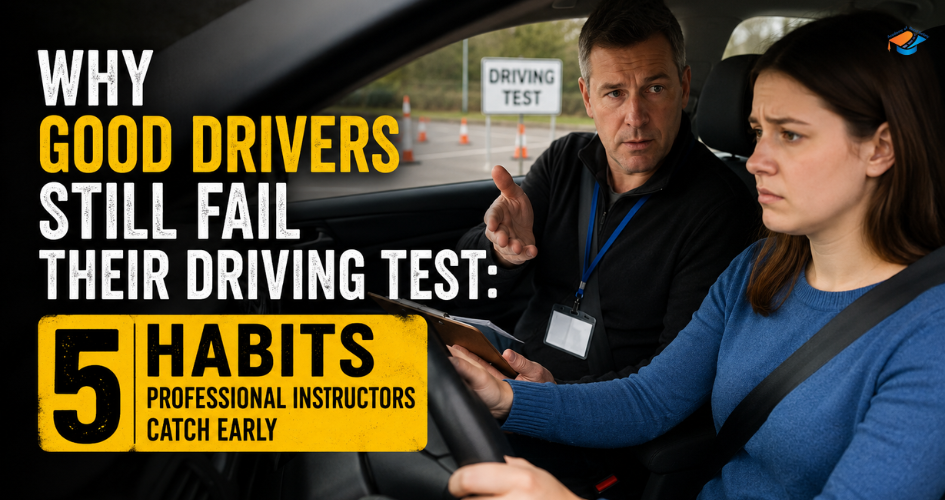
This article explores the hidden driving habits that cause many capable learners to fail their driving test and how professional instructors identify and correct them before test day.
The Difference Between a “Good” Driver and a Test-Ready Driver
Many learners start their driving journey believing that driving comfortably in everyday situations will automatically make them ready to pass their driving test. But when this bubble bursts, they’re faced with a bigger challenge: becoming a test-ready, or rather a road-ready, driver. If you think clearing the test requires driving from one place to another, handling traffic reasonably well, and having good parking and reversing skills, you’re very wrong. When you sit with an NSW driving test examiner, you’re more likely to make small mistakes that affect your score. Why? Because there is a difference between functional driving and technical driving. Examiners will assess your technical driving, like your observational skills, safe decision-making, proper positioning, hazard awareness, and following road rules regularly.
This is why learners trained through a professional Driving Instructor Course or nationally recognised qualifications like TLI41225 often perform better under test conditions. Professional instructors are trained to spot the small mistakes that learners usually do not notice themselves. This blog explores 5 such mistakes that most learners make, which only professional instructors catch and correct before the test day.
The 5 Driver Mistakes Only Professional Instructors Catch
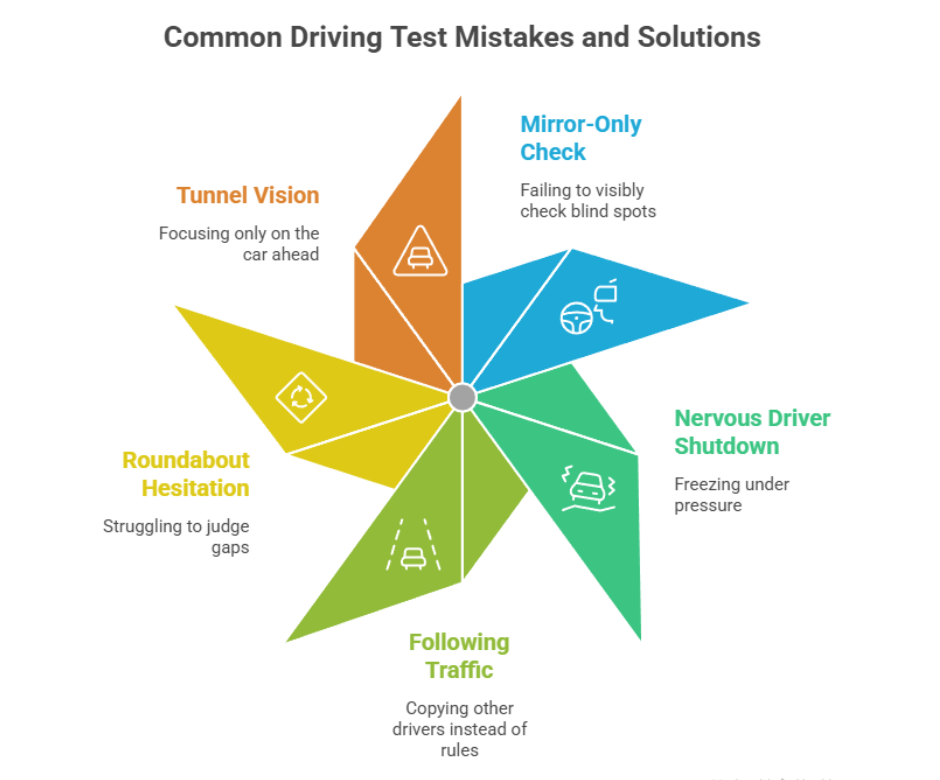
Habit 1: The Mirror-Only Check
It’s the simplest things that can have a big impact on the driving test. Small mistakes, like not checking the mirrors properly, can also cost you good points. You might think you’re checking the mirrors properly because you’re well aware of your surroundings. But the examiners are there to assess your visible observation skills. So, if they don’t see your head moving during a blind spot check, they might assume you never did it. A tiny detail, but it can cost you crucial marks during lane change, merging, or turning at intersections.
When you learn with a professional instructor trained through programs like Driving Instructor Course Sydney, they focus on noticing such ‘mirror-only’ habits in your blind spot checks and point them out promptly. It can help you develop visible and deliberate blind spot and mirror check routines, especially in heavy traffic and multi-lane roads, which demand more awareness.
Habit 2: The Nervous Driver Shutdown
The driving test is not just assessing driving ability. It is quietly assessing how well a learner handles pressure and unexpected situations at the same time. Normally, when you’re driving, you can steer, brake, and change gears easily. But the question is, can you do it under pressure? With the pressure of clearing the test sitting beside the driving test examiner, even basic driving tasks can suddenly feel harder. Why does this happen? Because your driving skills have not become automatic yet.
When the driving maneuvers become muscle memory, you can drive properly even when you’re under pressure. Professional instructors focus heavily on developing such subconscious competence or muscle memory in their students. They make learners repeat techniques and teach in a structured way, which helps learners develop muscle memory for the basics so the brain can focus on bigger hazards. One of the biggest benefits of such driving instructor courses for professional instructors is learning how to build these automatic driving responses properly.
Habit 3: Following Traffic Instead of the Rules
An unconscious habit many learner drivers have is to copy the behaviour of the drivers around them. Instead of following the road rules, you speed up when the traffic around you speeds up, and if the car before you rushes through a light, you’ll also follow the same without thinking about what you’re doing. This is a dangerous habit that can cost you important points on the test.
Examiners pay close attention to whether learners are making their own safe judgments or simply reacting to what everyone else is doing. This becomes especially important near school zones, intersections, and changing speed zones where surrounding drivers may not always behave correctly. Professional instructors can notice such behaviours in the learners early on and teach learners to make independent decisions.
Habit 4: The Roundabout Hesitation Problem
Even the most capable and otherwise confident drivers can make mistakes on roundabouts and intersections. The main reason is either hesitation and overcautiousness or driving impatiently with unsafe gaps. Selecting a safe gap is especially tough for inexperienced drivers as it involves judging not just distance, but also speed, timing, and risks involved simultaneously. On Sydney’s busy roads and intersections, one hesitant decision can quickly become a critical driving test error. And if your instructor fails to explain this clearly, you’re most likely to make a mistake and end up failing. Professional instructors trained through accredited programs like Driving Instructor Course use structured methods to teach learners how to assess gaps confidently and consistently.
Habit 5: Only Watching the Car Ahead
Many drivers drive with tunnel vision, that is, they focus only on the vehicle in front of them. This can lead to less time for reacting to hazards and increase the risks of accidents. Professional instructors trained through Driving Instructor Courses understand and notice this behaviour early on. They focus on teaching the learners to scan the road ahead in a long range, 10 to 15 seconds ahead, so they can predict what might happen next and have more time to react to it. This ability often becomes the difference between a smooth test drive and a critical error. This is what driving test examiners want to assess: your ability to constantly read the environment ahead and prepare early.
Turning a “Good” Driver into a Licensed Driver
Failing a driving test does not always mean someone is a bad driver. Often, it means they still have small habits working against them under pressure. That is where professional instruction makes a real difference. Experienced instructors trained through professional Driving Instructor Courses, like the TLI41225 qualification, do more than teach road rules. They identify hidden habits, correct weak observation routines, improve decision-making, and prepare learners for the mental demands of the test itself.
It is far easier to fix a habit before the test than to unlearn it after a failed result. So ask yourself honestly: are you truly test-ready, or just road-ready? Book a mock test or habit-check session with the Academy of Road Safety today and learn how professional guidance can turn small corrections into big results.
Frequently Asked Questions
Q1. Why do good drivers still fail their driving test?
A: Many capable drivers fail because of small technical habits such as poor observation routines, hesitation, tunnel vision, or inconsistent decision-making under pressure.
Q2. What do driving examiners look for during the test?
A: Examiners assess observation, hazard awareness, positioning, speed management, decision-making, and how consistently you follow road rules.
Q3. How do professional driving lessons improve test success?
A: Professional instructors identify hidden mistakes early, provide structured feedback, and help learners develop safe driving habits that become automatic.
Q4. What is the most common reason learners fail a driving test?
A: Common reasons include failing to check blind spots properly, poor gap selection, incorrect observation habits, and reacting too late to hazards.
Q5. Are mock driving tests worth it?
A: Yes. Mock tests help learners experience realistic test pressure, identify weak areas, and improve confidence before the real assessment.