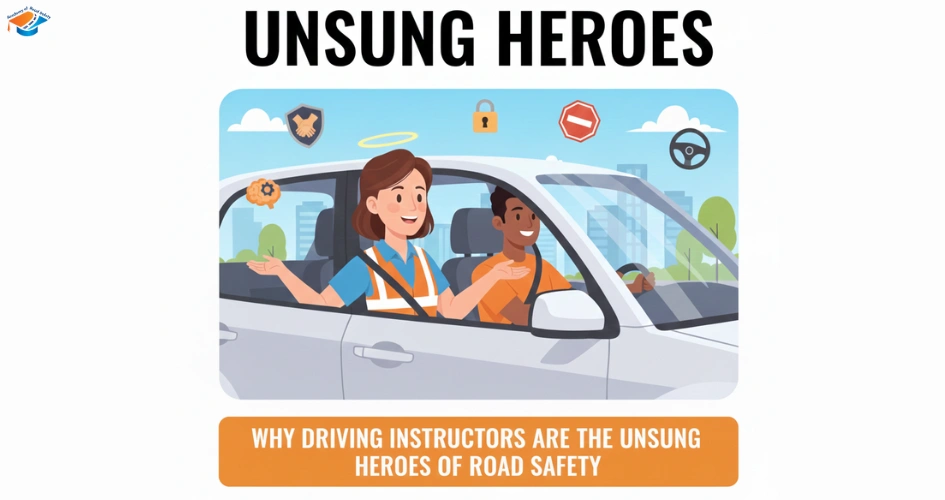
We lose so many lives to road trauma every year, with an approximate 3% increase in the percentage since 2020. We know how the government is working tirelessly to reduce road deaths. Yet behind the scenes, there is a silent profession working every day to prevent crashes before they ever make the headlines. No, we’re not about the paramedics or the police. We’re referring to the qualified instructors trained through professional driving instructor course, like TLI41225, who act like crisis managers, trying to eradicate the issue before it becomes a concern. They shape the driver’s skills, teach them about road rules and etiquette, and instil safer driving habits. Their impact isn’t measured by how many students pass the test; it’s measured by the crashes that never happen, the close calls avoided, and the safe habits ingrained from lesson one.
Building Safer Drivers From Day One: The Architect of Muscle Memory
Most of us still learn to drive from parents, well-meaning family members, or friends instead of learning from qualified instructors trained through driving instructor courses. These friends and family members teach you to drive by instinct instead of explaining proper techniques. They would unwittingly pass down shortcuts, share bad habits, and end up making you overconfident. But a TLI41225 qualified instructor would teach how to avoid missteps instead of correcting ingrained mistakes.
By instilling safe driving habits like proper hand position, mirror checks, blind spot awareness, and smooth braking, they create muscle memory. They would teach you defensive driving techniques like maintaining safe distances, managing speed, and staying alert in changing road and traffic conditions. And it’s these defensive techniques, habits, and muscle memory that can later prevent accidents and save lives. Professional Sydney driving school instructors plant these foundations before instinct is built, shaping safer drivers from the start.
The Hidden Guardians: The Impact We Never See
We hear a lot about all the road accidents and fatal crashes happening, and the lack of awareness, compliance, or safety in drivers. But what about the crashes that never happened, the collisions that were prevented, and the near-misses that were avoided by skilled, alert, and trained drivers? Behind every near-miss avoided or collision prevented is an instructor who taught a habit, a mindset, a moment of awareness that changed an outcome. By teaching hazard perception to new learners, they prepare them to maintain a habit of identifying risks early and responding to them before they become dangerous.
A recent study shows that hazard perception training can significantly improve drivers’ ability to detect risk, an important aspect in ensuring safety. These life-saving differences in driving habits are brought about by instructors who teach new drivers to judge distance, speed, etc., and make split-second decisions. We cannot measure the value of a crash that never happened, and that’s the impact our driving instructors, the hidden guardians of road safety, have.
Training the Mind Behind the Wheel: The Cognitive Trainers of Safe Driving
Driving is as much a mental activity (if not more!) as it is physical. Cars may move fast, but drivers need to make quick decisions even faster. While all beginner drivers learn how to steer the vehicle and stop properly, driving school instructors go beyond these surface-level teachings. Instructors train learners how to think ahead, perceive problems and think of solutions beforehand, predict risks and expect the unexpected. They guide learners in making the right decisions while merging safely, giving way, and handling complex road situations with confidence. They explain not just what to do, but why it matters. Thus, they teach the drivers not just to react, but to anticipate and reason. It’s the difference between passing a test and preventing a crash.
Dual Controls in Action: The Instructor’s Role When Every Second Counts
You know how drivers have to make split-second decisions on the go, even in crunch situations? Well, so do your instructors! Ask any instructor, and they’ll tell you how their right foot is always hovering over the dual brake in every driving lesson. Driving instructors carry the responsibility of safety while sitting in the most vulnerable seat in the car. They have to remain composed and keep their voice calm, even when the learner is anxious, confused, or about to accelerate instead of stop. While you think you’re having a calm, smooth-sailing lesson, your instructor is silently calculating the risks and deciding whether to intervene or let you correct yourselves.
Teaching in heavy traffic, especially in high-pressure areas like Sydney, Melbourne, or Canberra, requires emotional control, patience, and nerves of steel. Yet instructors do it daily, with reassurance, guidance, and a steady hand.
Upholding Road Etiquette and Culture: The Instructor’s Ethical Compass
Driving instructors are more than just teachers of driving skills. They’re, in fact, the ambassadors of road culture. The nationally recognised qualifications, like the TLI41225 driving instructor course, ensure instructors know all about the road laws, behaviour psychology, teaching methodology, risk management, and ethical practice. Whether the student is nervous, overconfident, multilingual, or neurodivergent, they are taught how to adapt, support, and guide all types of students.
Beyond handling a vehicle, driving instructors teach their students all about road rules, etiquette, and driving culture in their locality and country. They teach how to show courtesy while merging, have patience at roundabouts, and stay calm in pressure situations or frustrating traffic jams. And all this knowledge and etiquette is what prevents road rage and makes drivers behave well on the road. Every safe driver today reflects the standard of the instructor who taught them.
A Legacy on the Road: Why Their Influence Lasts a Lifetime
Driving instructors are architects of muscle memory, cognitive trainers, crisis managers, behaviour shapers, and ethical role models. By building awareness, control, and responsible driving habits, qualified instructors help create safer drivers and reduce the likelihood of road accidents. Their work doesn’t end with a passed test. It lives on every time their student checks a mirror, slows at a blind corner, or avoids a crash because of one lesson that stuck. So, the next time you drive safely through traffic, take a moment to thank the instructor who laid your foundation, whether you remember their name or not.
Ready to become one of the unsung heroes shaping safer roads for Australia? Begin your journey today. Start your Driving Instructor Course and work toward your TLI41225 qualification with the Academy of Road Safety, where road safety leaders are made.
Frequently Asked Questions
Q1. Why are driving instructors considered essential to road safety?
A: Driving instructors do more than teach vehicle control—they shape the habits, mindset, and decision-making skills that prevent crashes long before they happen. Their training helps learners adopt safe behaviours that stay with them for life, reducing the likelihood of high-risk mistakes on the road.
Q2. How does professional driving instruction reduce crash risks?
A: Research shows that structured hazard-perception training and supervised lessons significantly improve a driver’s ability to detect risks early. Learners trained by qualified instructors make fewer serious driving errors and show better long-term safety outcomes compared to those taught informally by family or friends.
Q3. What skills do qualified instructors teach that parents or friends often miss?
A: Professional instructors trained through courses such as TLI41225 teach the “why” behind road rules, build hazard-anticipation skills, and reinforce life-saving habits like regular mirror checks, blind-spot awareness, and controlled braking. They also correct risky instincts before they become ingrained behaviours.
Q4. Why is emotional control such an important part of an instructor’s role?
A: Instructors must remain calm and composed even in high-pressure situations, such as when learners panic or make sudden errors. Their ability to stay steady—and use dual controls only when necessary—keeps everyone safe while preserving the learner’s confidence.
Q5. How do Driving Instructor Courses prepare future instructors for these responsibilities?
A: The Academy of Road Safety delivers nationally recognised training, including the TLI41225 Driving Instructor Course, which equips instructors with hazard-perception teaching techniques, behavioural psychology, road-law expertise, and adaptive communication skills. Graduates are prepared not just to teach driving, but to shape safer drivers for the future.