What This Article Covers
This article discusses Australia’s rising road toll, key safety statistics and regional risk differences, and explores why professional driver education is essential for developing safer, more responsible drivers and reducing road trauma. Readers will also learn why driving instructor courses are important and how they help in ensuring road safety.
The Current State of Road Safety
Many people think that learning to drive from a professional driving school is a waste of money and time. They prefer learning from a friend or family member and frown upon the structured lessons that instructors trained through professional driving instructor course, like the TLI41225 Certificate course, teach. Today, we’re addressing this article to those people.
Ever wondered why road trauma remains such a serious issue for the government despite various road rules and traffic laws being implemented? Recent data from the Australian Government’s National Road Safety Data Hub shows that the road fatality rate in Australia for the past 12 months ending in February 2026 was 4.8 deaths per 100,000 people. This rate is 2.9% higher than the same time last year. The current state of road safety should be an eye opener and yet many fail to see its significance. It’s important for them to know that driving education is what makes you a safer, more skilled, and more responsible driver. It’s not something that your friends and family alone can teach you.
Road Deaths Are Increasing
We see new government policies and updated traffic rules everyday, showing the hopes and efforts of the authorities to make our roads safer for all. And yet road fatalities have been gradually rising in recent years. The recent Annual Trauma report by Data Hub highlights how road deaths have been increasing by around 4% annually since 2020, with 2024 claiming 1300 lives, which is 42 (or 3.3%) more than 2023. While there was a decline in these rates over the five years to 2020. But since then these rates have been increasing by 3% per year, reaching 4.78 in 2024.
But these aren’t just numbers. This is a clear proof of how we’re failing as a nation in keeping our roads safe. This trend shows how the national road safety targets are too far from reaching their goals. And that poses the question how serious are we about our own safety? If we’re doing a lot for road safety, why are people still losing their lives on the roads every year?
Where Are the Risks Highest?
Another key information revealed in the report by Road Safety Data Hub is the uneven distribution of risk across the country. What this means is that not all states of Australia have high fatality rates. There are some areas where driving is riskier than others. Let’s check out this data:
-
New South Wales recorded the highest number of road deaths in the latest 12-month period with with 377 deaths, which is a 20.1% increase on the previous 12 months.
-
Queensland wasn’t much far behind with with 317 deaths which was an 8.2% increase from the previous year.
In terms of fatality rates too, there are some prominent differences:
-
Northern Territory continues to have the highest fatality rate per population of 14.3 per 100,000 people for the 12 months ending February 2026, a marked 29.2% decrease from the previous year.
-
Australian Capital Territory reports the lowest fatality rate nationwide, at 3.1 deaths per 100,000 people, and yet it's a 48.0% increase from the previous year.
This data shows the high difference in the road risks and driving habits of people across Australia. White some busy urban areas like NSW and NT have high risk, other places aren’t very far behind. And it’s not anything to be proud of. These numbers are a reality check that should stir us into taking driving education and road safety more seriously.
Why It Matters
Our government, according to the National Road Safety Strategy 2021-30 aims to halve road deaths by 2030 and strive for zero deaths by 2050. And our road authorities are also working diligently towards these goals with new laws, policies, awareness programs, and educational courses. But, the statistics discussed above show that more action is needed if we are to get any closer to these goals. Every statistic give here represents a life lost and families affected. It’s imperative we do something to reduce this impact and improve road safety.
The Role of Driver Education
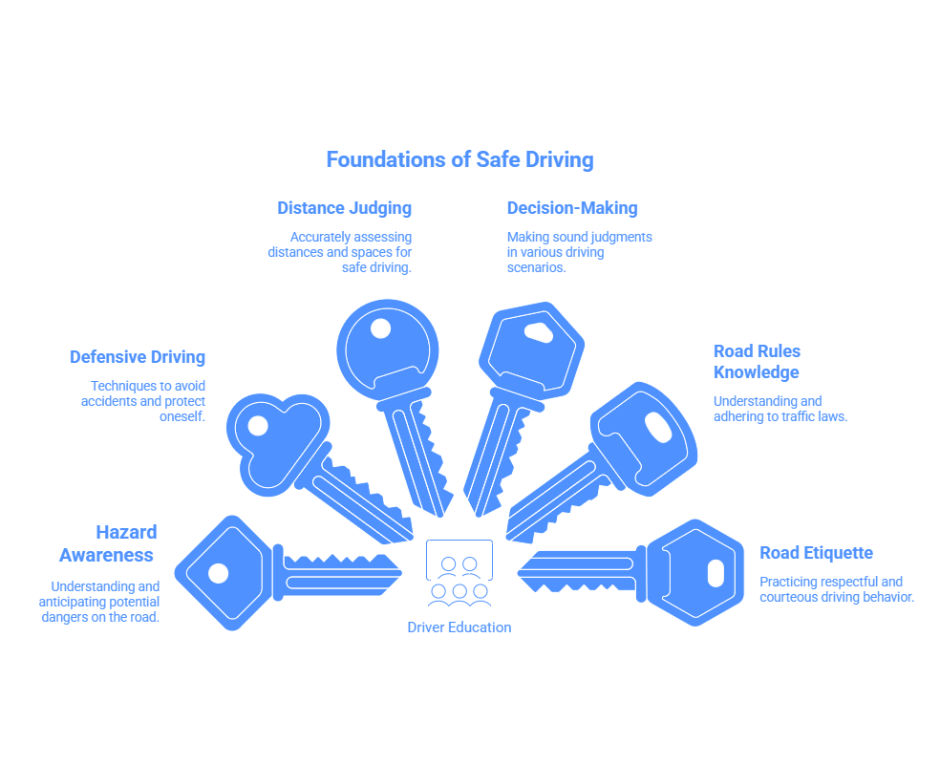
The only thing that can make our roads safer is aware and responsible drivers. And just like anything else, the key here is proper and thorough driver education. Indeed at the Academy of Road Safety (AORS), we believe education is essential if we want our drivers to be more skilled, aware, and responsible. A professional driving instructor course is not just about learning to operate a vehicle or complying with traffic laws. It’s much more than that. Here’s what effective driver training focuses on:
-
Hazard awareness
-
Defensive driving techniques
-
Judging distance, space, and impact
-
Safe decision-making
-
Knowledge of road rules and traffic laws
-
Proper road etiquette
Well-trained drivers don’t just drive skilfully. They’re able to handle changing weather and road conditions, anticipate potential problems while driving and respond to them appropriately, think on their feet, judge distances properly, and drive safely. They don’t just follow speed limits blindly; they’re aware of when to adjust their speed to the traffic. They know why traffic rules are important and how complying keeps the roads safer. They’re aware of their duties and responsibilities as drivers just as much as they’re aware of their rights and benefits.
Final Thoughts
The biggest thing that all drivers need to remember is that road safety is the responsibility of every road user, not just the government. And if we want our roads to be safer, it has to start with every driver. If our drivers are well-trained, aware, and behave responsibly, we can certainly bring a noticeable change in road safety. Professional instructors trained through training programs, like the nationally accredited TLI41225 Certificate IV in Motor Vehicle Driver Training, know how to teach drivers to be more confident, skilful, safe, and responsible on the road. With their diligent efforts and proper driver education, we can reduce road deaths and make the roads safer for everyone.
If you’re also an aspiring instructor wanting to contribute to road safety through driver training, join our professional driving instructor courses at the Academy of Road Safety. We can provide you with up-to-date industry knowledge and a skillset that will make you a successful Driving Instructor.
Frequently Asked Questions
Q1. Is learning from friends or family enough to become a safe driver?
A: While helpful for basic practice, informal learning often lacks structure, safety techniques, and in-depth knowledge. Professional driver education provides a more comprehensive and safety-focused approach.
Q2. What is the role of driver education in road safety?
A: Driver education teaches hazard perception, defensive driving, decision-making, and road awareness, all of which are essential for preventing accidents and reducing risks.
Q3. Which areas in Australia have the highest road risk?
A: Road safety risks vary by region, with some states and territories like NSW recording higher fatality rates than others due to factors like road conditions, traffic volume, and driver behaviour.
Q4. How can professional driving courses improve safety?
A: Professional courses focus on real-world driving scenarios, risk management, and responsible behaviour, helping drivers respond effectively to changing road conditions.
Q5. What skills do well-trained drivers develop?
A: They develop hazard awareness, safe decision-making, distance judgment, defensive driving techniques, and a strong understanding of road rules and etiquette.
Q6. Can better driver education reduce road fatalities?
A: Yes, well-trained drivers are more aware and cautious, which significantly lowers the likelihood of accidents and contributes to overall road safety.