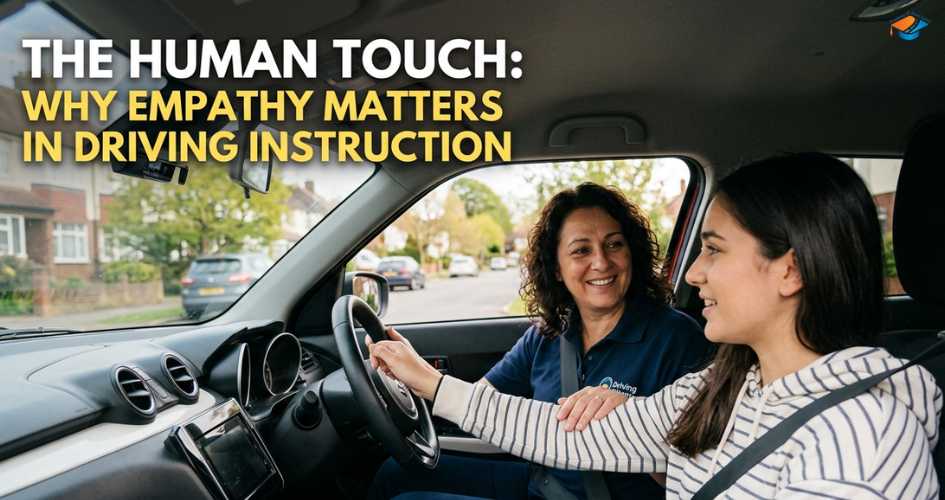
What This Article Covers
This article explores why empathy is essential in driving instruction, how it improves communication and confidence, and how it helps create safer, more responsible drivers for the long term. This write-up also discusses how professionally trained driving instructors use empathy to understand the needs of their students and adjust their teaching accordingly.
Learning to Drive Is Emotional, Not Just Practical
We often think of driving as a technical skill where you use your physical and mental faculties to handle a vehicle safely on the road. But driving instructors know that driving goes beyond the technicalities and connects to the driver’s emotions. Some drivers feel nervous, anxious, overwhelmed, or unsure about their skills and abilities in the beginning. Some are afraid to make mistakes, while others worry about being judged. These emotions influence a driver’s learning and performance. They need the right support so that their emotions don’t slow down their progress and affect their confidence. This is where empathy becomes a powerful tool.
As the famous author Simon Sinek said, “Empathy is being concerned about the human being, not just their output”. Drivers need instructors who understand what they’re feeling and try to solve their driving problems instead of chasing the perfect test result. Instructors trained through professional programs like a Driving Instructor Course and the nationally recognised TLI41225 qualification understand this and adjust their teaching styles accordingly.
Understanding the Learner
For a driving instructor, understanding the learner - their learning style, strengths, weaknesses, skills, etc. - is very important. Every learner has a different mindset and approach towards learning. Some are confident but lack control, while others are cautious and hesitant. Professionally trained instructors understand the importance of being empathetic and knowing what each learner needs. They recognise these differences and adapt their teaching style accordingly. From explaining concepts differently to offering reassurance and feedback when needed, instructors personalise their teachings to suit the learner’s pace and comfort.
Building Confidence Through Patience
When do you feel confident in your driving skills? When you do everything that your instructor teaches you correctly? No. It’s when you feel safe enough to make mistakes and learn from them. A calm and patient instructor creates an environment where learners are not afraid to try. They ensure their students have the freedom to voice their doubts and ask for help when they make mistakes. When learners feel this safety and support, they become more relaxed and open to learning. With this open mindset, they can learn better, develop more control, trust their abilities, and build genuine confidence over time.
Better Communication Creates Better Drivers
Clear and open communication is essential in driving instruction, and empathy can help instructors improve their communication with the learners. When instructors listen to their students’ needs, doubts, concerns, fears, and strengths, they can connect with learners more effectively. And when they explain concepts properly and clearly communicate their instructions, learners understand not just what to do but also why it matters. This knowledge or deeper understanding of driving concepts and rules helps them make better decisions on the road.
Teaching Skills That Last Beyond the Test
Learners often forget that the main goal of learning to drive is not just to pass the driving test, but to be able to drive safely and skilfully. The aim of driving education is to create safe and responsible drivers who carry good driving habits for their entire lives. And to achieve this, instructors need to have empathy. They must listen to their students’ concerns, understand their needs, and adjust their teaching accordingly. When instructors are patient, aware, and respectful, learners are likely to adapt these behaviours too. That’s why professional instructors trained through quality driving instructor courses like the nationally recognised TLI41225 emphasise the role of empathy in preparing learner drivers to become thoughtful and responsible road users.
Beyond the Wheel: Lessons That Stay for Life
Empathetic instructors impact more than just the learner’s driving skills. They shape how learners approach challenges, handle pressure, and interact with others on the road. When instructors are empathetic towards their students, the learners learn to be more patient, aware, and considerate while driving. These qualities contribute directly to improving the driving culture and making roads safer. The confidence and mindset developed during training often stay with learners long after they pass their test.
Better Instructors Create Safer Drivers
Empathy is not an extra skill in driving instruction. It is a core part of effective teaching. By understanding learners, communicating clearly, and creating a supportive environment, instructors help students build confidence and develop safe driving habits that last a lifetime. Professional driving instructor courses from reputed institutions, like the Academy of Road Safety, also emphasise the importance of having empathy for driving instructors.
If you are passionate about improving road safety and making a real difference in people’s lives, consider becoming a driving instructor. At the Academy of Road Safety, we offer various training programs, like the TLI41225 qualification, which can help you gain the skills needed to guide learners with both expertise and empathy, shaping confident drivers for the future.
Frequently Asked Questions
Q1. Why is empathy important in driving instruction?
A: Empathy helps learners feel comfortable and supported, which reduces anxiety and improves their ability to learn effectively.
Q2. How does empathy improve learning outcomes?
A: When learners feel understood, they are more confident, more engaged, and more open to feedback, leading to faster progress.
Q3. Can empathy make someone a better driving instructor?
A: Yes. Empathy improves communication, builds trust, and helps instructors adapt to different learning styles.
Q4. Do professional driving instructor courses teach empathy?
A: Yes. Programs like TLI41225 include communication and teaching strategies that help instructors support learners effectively.
Q5. How does empathy contribute to road safety?
A: Empathy encourages patience, awareness, and respectful driving behaviour, which leads to safer roads for everyone.