What This Article Covers
This article explores the skills driving instructors need when teaching in modified vehicles, including adaptive teaching methods, vehicle safety, working with occupational therapists, and supporting learners with disabilities confidently and safely.
Driving Instruction Can Change Someone’s Entire Life
Driving is not just an activity, but a path to mobility, independence, and self-reliance. But for learners with disabilities, physical or otherwise, this independence can seem too hard to achieve and too good to be true. Vehicle modifications for disabled learners can help make independent driving possible, but the vehicle alone is not enough. These learners also need good instructors well-versed in teaching in modified vehicles and working with learners with disabilities. That’s why professional driving instructor course and qualifications like TLI41225 also focus on teaching inclusive driver education and adaptive driving techniques. When teaching disabled learners, instructors need to be patient, adaptable, and have a technical understanding and a strong awareness of their unique needs. Because in these lessons, they’re not just preparing someone for a driving test. They are helping disabled learners gain confidence, independence, and greater access to everyday life. In this blog, we’ll explore teaching in modified vehicles and the role of driving instructors in disability driving training in more detail.
Understanding Common Vehicle Modifications
Vehicles with modifications can help make driving much easier and accessible for people with disabilities. These vehicles are specifically designed to help drivers operate a vehicle safely despite physical limitations or mobility restrictions. But what type of modification to add to your vehicle depends entirely on your needs. Some common modifications include:
Left-Foot Accelerators
Some disabilities restrict mobility or reduce muscle control, which can make driving a challenge. Left-foot accelerators reduce these restrictions by helping those who cannot use their right leg to control acceleration safely with their left foot.
Steering Knobs
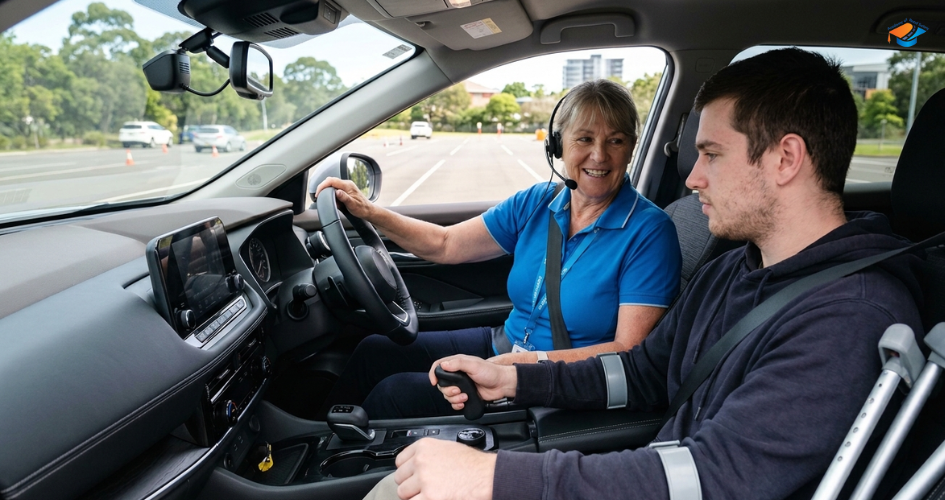
Steering knobs help drivers with limited arm strength or mobility steer more comfortably and maintain better control with one hand. So, even if you have restricted mobility in one hand, you can still drive safely.
Hand Controls
Hand controls allow drivers to operate acceleration and braking functions manually instead of using foot pedals. This is a great option for those with mobility issues below the waist.
Advanced Custom Modifications
Some vehicles include specialised systems such as joystick steering, customised pedal arrangements, or electronic driving controls designed for specific physical needs.
These advanced and modified vehicles give learners with disabilities a chance to become self-reliant drivers. But along with these modifications, learners also need instructors who know these techniques and can guide them correctly on proper use. However, for instructors, understanding how these systems work is essential before lessons even begin.
Patience and Adaptability Matter More Than Ever
When teaching learners with disabilities, instructors must remain patient and be adaptable. All learners have their own style and pace of learning. While some learners may take to modified vehicles like fish to water, others may need time to adjust their movements and become comfortable with modified vehicle controls. Some may tire more quickly, so you have to plan lessons to progress more slowly. But good instructors take these adjustments in their stride instead of thinking of them as a setback. They work smartly by breaking tasks into smaller steps, using clearer demonstrations, and creating a calm learning environment. They’re open to adjusting their lesson lengths and allowing extra repetition for students who need more attention and practice.
Safety Must Always Come First
While it’s true for drivers on the road, even learners should build a habit of safety-first always. That’s why instructors usually focus more on safety while teaching. And when it comes to teaching in modified vehicles, it’s essential to pay extra attention to safety procedures. Before every lesson, instructors should carefully check whether modifications are working properly, equipment is secure, seating and positioning are correct, and whether the controls are adjusted as per the learner’s comfort. They should also practice emergency stop procedures regularly so that they and the learner both know how to respond if something goes wrong. Such safety checks and habits, despite being small, can make a major difference during lessons.
Working Alongside Occupational Therapists
Occupational therapists (OTs) play a major role in helping learners with disabilities begin driving safely. They assess the learner’s physical abilities, recommend suitable vehicle modifications, and identify strategies that can help them learn to drive safely. Professional driving instructors should work closely with these recommendations to ensure their lessons align with what the learner needs. When instructors and OTs work together closely, they can help create more consistent support for the learner and improve long-term outcomes.
Teaching More Than Driving Skills
Passing the driving test is only one part of the journey. Driving safely on the road in varying conditions is more important, especially for disabled learners. For learners with disabilities, learning to drive can improve employment opportunities, increase independence, reduce reliance on others, and improve overall quality of life. And that’s why instructors trained in the art of teaching in modified vehicles matter so much. They’re not simply teaching learners to operate a car. They are helping them become capable drivers, confident in their abilities to navigate the world more independently.
Final Thoughts
Teaching in modified vehicles requires more than technical knowledge. It requires patience, adaptability, empathy, and a commitment to helping every learner succeed safely. As adaptive driving technology continues to improve, the need for skilled and inclusive driving instructors will continue to grow.
If you are passionate about supporting learners from all backgrounds, consider expanding your skills through the Academy of Road Safety. Through a professional Driving Instructor Course and the TLI41225 qualification, you can develop the knowledge and confidence needed to deliver safe, supportive, and inclusive driver education.
Frequently Asked Questions
Q1. What are modified vehicles for driving lessons?
A: Modified vehicles include adaptive controls such as hand controls, steering knobs, or left-foot accelerators designed to help people with disabilities drive safely.
Q2. Why do driving instructors need special skills for modified vehicles?
A: Teaching in modified vehicles requires understanding adaptive controls, adjusting teaching methods, and supporting learners with different physical needs safely.
Q3. What is the role of occupational therapists in driver training?
A: Occupational therapists assess learners, recommend vehicle modifications, and help create safe driving strategies suited to the individual.
Q4. Are modified vehicle driving lessons different from standard lessons?
A: Yes. Lessons may progress at a different pace and require additional safety checks, adaptive teaching methods, and specialised vehicle knowledge.
Q5. Why is inclusive driver education important?
A: Inclusive driver education helps people with disabilities gain independence, confidence, employment opportunities, and safer access to everyday life.