What This Article Covers
Discover why successful driving instructors keep learning throughout their careers, how the industry continues to evolve, and why staying current benefits both instructors and their learners.
Great Instructors Never Stop Learning
A decade ago, most learner drivers turned up to lessons with one goal: pass the driving test. Today, they still want their licence, but they also have questions about electric vehicles, driver assistance technology, changing road rules and how to stay safe in increasingly complex traffic. That's one reason completing a Driving Instructor Course is only the beginning of becoming a great instructor. Roads change, vehicles evolve, and every learner brings different strengths, concerns and expectations. Instructors who continue learning are better equipped to prepare learners for real-world driving, not just test day.
The Road Environment Doesn't Stand Still
Australia's roads look different today than they did a few years ago. Electric vehicles are becoming more common, advanced safety features are fitted to everyday cars, and cyclists, motorcyclists and e-scooter riders all share the road with learner drivers.
The fundamentals of safe driving haven't changed. Observation, hazard perception and good judgement remain essential. What has changed is the environment in which those skills are applied. Imagine a learner driving an electric vehicle for the first time. They lift their foot off the accelerator, and the car slows more quickly than expected because of regenerative braking. An instructor who can explain what's happening helps the learner understand the vehicle instead of simply reacting to it. Moments like these show why keeping up with vehicle technology has become part of modern driver education.
Good Instructors Stay Current
Road rules aren't fixed. Licensing requirements, testing procedures and road safety initiatives continue to evolve as governments respond to new challenges. Learners rarely ask when an instructor completed their training. They simply expect the information they're given to be accurate. Whether it's explaining updated testing requirements or answering questions about new road rules, instructors need confidence that their advice reflects current standards.
At the Academy of Road Safety, we encourage future instructors to view learning as an ongoing part of the profession. Completing the TLI41225 Certificate IV in Motor Vehicle Driver Training provides a strong foundation, but staying informed afterwards is what helps instructors remain relevant throughout their careers.
Teaching People Is Different From Teaching Driving
Knowing how to drive and knowing how to teach are two very different skills. A learner who feels relaxed on quiet suburban streets may become overwhelmed the moment they enter heavy traffic. Another might have excellent vehicle control but struggle after failing a driving test. Giving both learners the same lesson rarely produces the best results.
Good instructors adjust their teaching to suit the individual sitting beside them. Sometimes that means breaking a skill into smaller steps. Other times it means letting a learner work through a situation independently before stepping in with advice. Those decisions come from experience, reflection and a willingness to keep improving. That's why a quality Driving Instructor Course focuses on communication and coaching techniques as much as practical driving skills. Building confidence is just as important as teaching learners how to park or change lanes.
Learners Watch Everything You Do
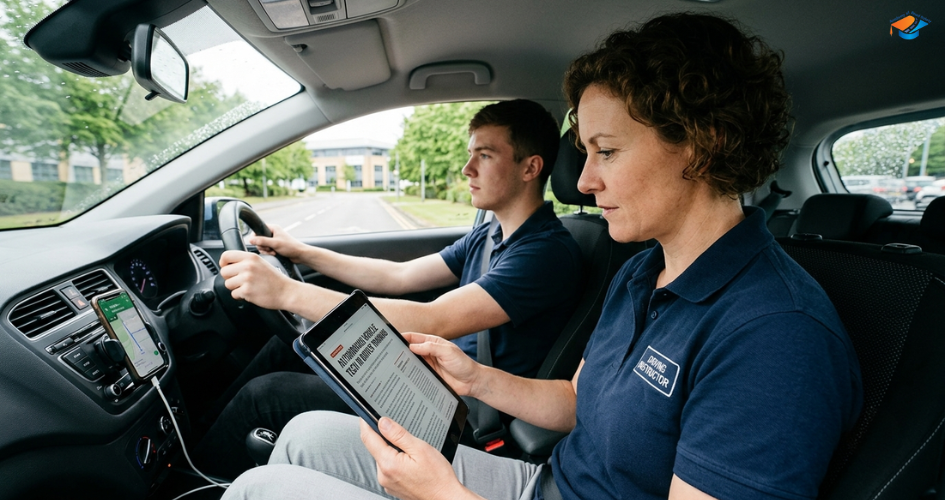
Driving instructors teach through example every time they get into the car. Learners notice how you scan intersections, check mirrors and respond when another driver makes a mistake. They also notice your attitude. Staying calm when a learner stalls the car or misses a turn often leaves a stronger impression than a long explanation afterwards.
Many experienced instructors reflect on lessons once they're finished. If a learner struggled with a manoeuvre, they think about whether a different explanation or demonstration might work better next time. Small improvements like these help instructors continue developing long after they complete their Driving Instructor Course.
Building a Career That Keeps Pace
The best instructors aren't remembered for teaching the techniques perfectly. They're remembered because they listened, adapted and continued learning as the industry evolved. So, if you're an aspiring instructor considering a career in driver education, you should complete a professional driving instructor course, like the TLI41225 Certificate IV in Motor Vehicle Driver Training, to get the practical knowledge and teaching skills you need to begin your career.
At the Academy of Road Safety, aspiring instructors develop the confidence to teach safely, communicate effectively and support learner drivers in an industry that never stands still.
Frequently Asked Questions
Q1. Why is it important for driving instructors to keep learning?
A: Road rules, vehicle technology, and what learners expect all keep changing. Staying current means instructors give accurate guidance, keep improving how they teach, and actually prepare learners for the roads they'll be driving on today.
Q2. What does the TLI41225 Certificate IV in Motor Vehicle Driver Training cover?
A: It equips aspiring instructors with practical driving instruction skills, coaching techniques, communication strategies, and the grounding needed to teach learner drivers safely and well.
Q3. Can experienced driving instructors benefit from another Driving Instructor Course?
A: Yes. Even seasoned instructors get value from refresher training. It's a good way to sharpen teaching techniques, stay on top of industry changes, and build confidence working with different kinds of learners.
Q4. Where can I enrol in a Driving Instructor Course in Sydney, Melbourne or Canberra?
A: The Academy of Road Safety runs nationally recognised training across multiple locations. Whether you're after a Driving Instructor Course in Sydney, Melbourne, or Canberra, there's training available to set you up for a career in driver education.
Q5. Does vehicle technology change the way driving instructors teach?
A: Yes. Features like autonomous emergency braking, lane-keeping assistance, and regenerative braking are common in newer vehicles now. Instructors need to understand how these systems work so they can explain them clearly, while still making sure learners build genuine driving skills instead of leaning on the technology to do the work for them.