What This Article Covers
This article explains how driving instructors can integrate car maintenance and safety skills into lessons, helping learners build confidence, prevent breakdowns, and become more responsible, well-prepared drivers.
Why Driving Lessons Should Go Beyond Just Driving
Most people think that road safety starts and ends with knowing how to control a vehicle on the road. But there’s a lot more that affects and contributes to road safety. Understanding how a vehicle works, how to maintain it, and how to respond in unexpected situations is just as important as controlling it on the road. Modern driving education focuses on all these factors along with teaching vehicle control, driving skills, and road rules. Instructors with professional training from driving instructor course like the nationally recognised TLI41225 qualification know and understand this quite well. That’s why they teach their students how to always be ready to handle real-world situations and issues with confidence and responsibility. By incorporating car maintenance and safety skills into lessons, instructors help learners become more aware, capable, and independent drivers. This article explores how instructors make car maintenance and safety skills a part of their driving instruction for effective teaching.
Simple Car Maintenance Every Learner Should Know
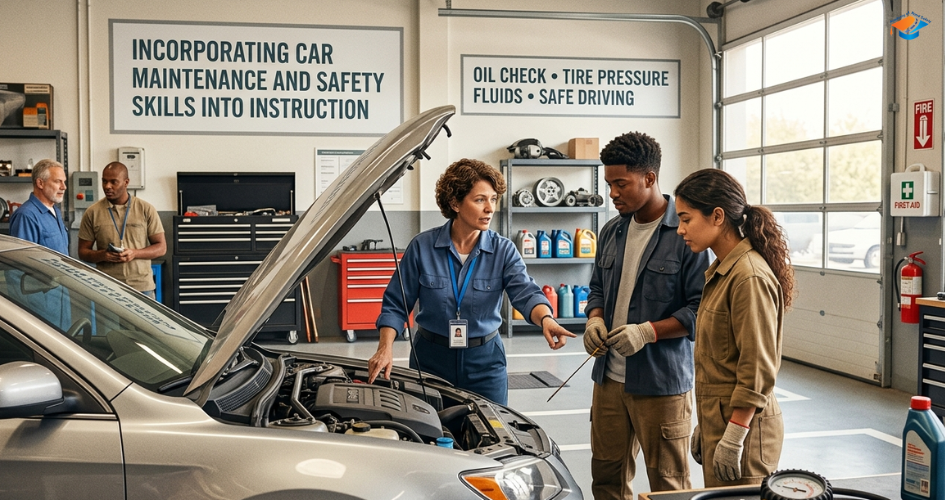
Maintaining your vehicle may seem basic but many drivers underestimate or forget this important factor of road safety. But these small habits like checking tyre pressure and monitoring oil and fluid levels can prevent major issues later while driving. That’s why instructors emphasise vehicle maintenance in their lessons. They teach learners the vehicle basics like fluid levels, tyre and brake basics, etc. and also help them understand how to keep their vehicle in good condition. This helps learners to notice early warning signs from their vehicles, making them less likely to face sudden breakdowns while driving. These skills also build a sense of responsibility, which is essential for long-term safe driving.
Why Regular Safety Checks Matter on the Road
A faulty brake or a non-working headlight is not just an inconvenience, it is a serious safety risk. Such important vehicle components and features directly affect the visibility and control of the vehicle and can put the drivers in serious trouble if not working at their best. Regular vehicle safety checks help the drivers stay safe and in control of their vehicles while driving. That’s why instructors focus on teaching learners to inspect brakes, lights, windscreen wipers, oil levels, etc. regularly. These checks can show problems before the vehicle is on the road, thus helping prevent accidents.
Teaching More Than Just the Road Rules
Along with knowing the road rules, understanding car maintenance and other safety skills is equally important. A skilled, confident, and safe driver can not just handle his vehicle and follow road rules, but also recognise signs, anticipate hazards, and drive responsibly. Professional training programs like Driving Instructor Course Sydney place equal importance on knowledge and practical skills. They teach the students more than just the road rules. They prepare their learners to face the challenges of driving in the real-world. This balanced approach ensures learners become not only capable drivers but also responsible road users.
What to Do When Things Go Wrong on the Road
When you’re driving on the road in real life, without your instructor to guide you out of tricky situations, mistakes and issues are bound to happen. Emergencies are a reality of driving on the road and learners should be prepared to deal with them. Driving instructors should ensure their learners know and understand what to expect and do in situations like accidents or breakdowns. They should know when and how to safely pull over, use hazard lights correctly, and contact emergency services if necessary. Knowing how to stay calm and efficient in such situations can help drivers stay safe and also improve road safety.
Simple Steps Before Every Journey
Basic pre-drive checks are essential for car and driver safety. So, every driver should know and make a habit of doing these checks every time they drive. Instructors should teach drivers these basic checks including adjusting mirrors, fastening seatbelts, and ensuring the driving position is comfortable. These small habits and simple checks can help prevent distractions for the learners and improve their control.
Understanding What Your Car Is Telling You
Technology has made a lot of things pretty simple. Take a vehicle’s warning signs for example. Modern vehicles give important information through dashboard warning lights. Instructors should teach learners what these warning signals mean and how to respond to them to avoid potential issues. Ignoring warning lights can lead to serious mechanical problems or unsafe driving conditions. That’s why modern driving instructor courses emphasise the importance of understanding a vehicle’s signals for new drivers.
How Driving Habits Affect Safety and Efficiency
The way you dive also has a big impact on your safety and efficiency. Drivers should know how to use their vehicles properly to improve their safety, longevity, and performance. Instructors should guide learners on fuel efficiency, smooth driving habits, and proper vehicle loading. Knowing these practices can not only reduce the vehicle’s wear and tear but also improve road safety and environmental impact.
From Passing the Test to Driving for Life
When instructors start teaching car maintenance and safety skills in their driving lessons, learner drivers become more capable and confident drivers. This approach to driving education shifts the focus from simply passing a test to being fully prepared for real-life driving. Professional driving instructors trained through quality driving instructor courses, like the TLI41225 qualification, can teach learners how to care for their vehicle along with driving skills. This is a great way to help drivers become better equipped to handle the road safely and responsibly.
If you are an aspiring instructor passionate about delivering quality driver education, consider taking the next step with the Academy of Road Safety. We offer a range of driving instructor course to help you gain the skills needed to train safer, more prepared drivers and make a lasting impact on road safety across Australia.
Frequently Asked Questions
Q1. Why should driving lessons include car maintenance skills?
A: Including maintenance skills helps learners prevent breakdowns, understand their vehicle better, and become more responsible drivers.
Q2. What basic car checks should learners know?
A: Learners should know how to check tyre pressure, oil levels, lights, brakes, and wipers before driving.
Q3. How do instructors teach emergency handling?
A: Instructors guide learners on how to respond to breakdowns or accidents, including pulling over safely and contacting emergency services.
Q4. What are pre-drive safety checks?
A: These include adjusting mirrors, fastening seatbelts, checking surroundings, and ensuring the vehicle is ready to drive.
Q5. How does this training improve road safety?
A: It prepares drivers to handle real-world situations, reduces risks, and encourages responsible vehicle use.