What This Article Covers
Learn how new driving instructors can prepare for their first lesson, build learner confidence, communicate clearly, manage safety, and reflect on their teaching.
Before You Teach, Prepare
You’ve just completed the driving instructor course, and you’re ready to take on your first learner, excited to do everything right and leave a fabulous first impression. But without proper planning, you can end up ruining not just the lesson but also their mindset and approach to driving. Because when you’re sitting beside the learner, you're no longer the person learning how to handle the car. You're the person responsible for helping someone else feel safe enough to learn. It’s a big responsibility that can make even a confident driver a little nervous. You have to think about the vehicle, the lesson, the learner, and the traffic around you, often at the same time. A little preparation before the student arrives can make the lesson feel far more manageable and give you the headspace to focus on what matters most: teaching.
Get the Car Ready Before the Learner Arrives
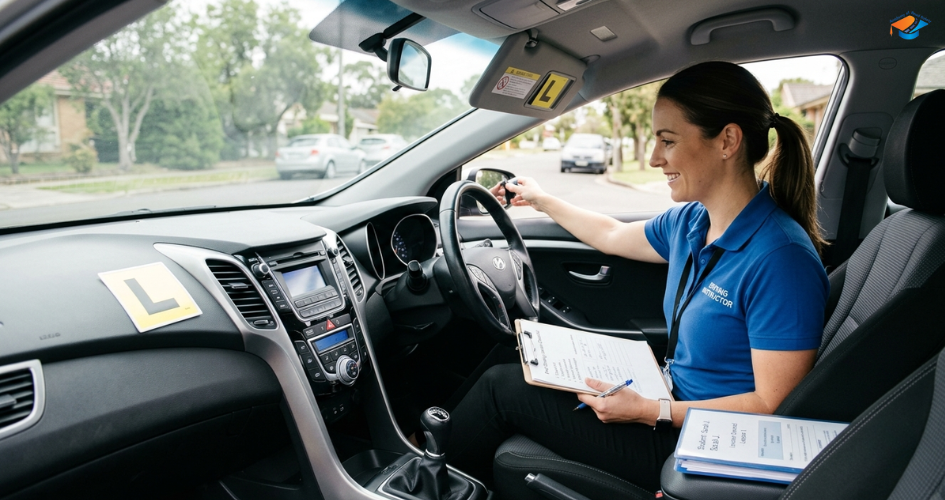
Your training vehicle is a big part of your training environment, so it makes sense to keep it ready before the lesson begins. Preparing the learning vehicle usually means checking that it is clean, roadworthy, and has the required safety equipment, including dual controls, correctly adjusted mirrors, and L plates where required. Beyond these basic checks, you can also sit in the driver’s seat and check the controls yourself before the learner arrives. You don't want to discover halfway through a lesson that a mirror needs adjusting or that something in the vehicle isn't working as expected. A few minutes of preparation can prevent unnecessary distractions once you're on the road.
Don't Try to Teach Everything in One Lesson
As a new instructor, you might want to show how much you know, but the first lesson isn't the time to cover everything. Your learner may be completely new to driving and still getting used to the pedals, steering wheel, mirrors, and basic controls. So, it’s better to start slow. A learner who leaves the first lesson feeling capable is in a much better position to keep learning. So, for the initial lessons, set one or two realistic goals. You can spend the first session introducing vehicle controls, moving off and stopping safely, or helping the learner become comfortable in a quiet area. Once those basics start to feel natural, you can build from there.
Help the Learner Settle In
It’s natural for learners who’ve never operated a vehicle before to feel nervous the first time. However, this nervousness doesn’t mean a learner isn't capable. You can help them settle down and stop feeling nervous by starting with a calm introduction, a quick explanation of how the lesson will work, and a little reassurance. If your learner is worried about stalling, tell them it's a normal part of learning. It will help take some of the pressure away before they even start driving.
Give Instructions They Can Act On
Clear communication, one of the most important skills taught in a Driving Instructor Course, is also important to establish trust between the instructor and the learner. Learners need enough information to understand what you're asking without being overloaded with instructions while they're trying to control the vehicle. Instead of bombarding the learner with orders, try to give them clear sequential instructions on what you want them to do. As they become more confident, you can gradually reduce the amount of guidance and let them make more decisions themselves.
Know When to Step In
It’s the instructor’s responsibility to keep the learner safe. But that doesn't mean you need to correct every small mistake immediately. Give your learners the opportunity to think, make manageable errors, and understand what they could have done differently. However, if a learner approaches a situation that is becoming unsafe, you need to intervene promptly. But this is not something you’ll learn from the get-go. Learning to judge when to intervene and when to let the learner work something out is a skill that develops with experience.
Finish With Useful Feedback
How you end the lesson also matters a lot because it is also the time that decides what the learner will take away from the lesson. So, when the car is parked, spend a few minutes talking through what went well and where the learner needs more practice. You can ask what they found difficult or whether there was anything they felt unsure about. Then make a note of what you should revisit next time. This gives the learner a clearer sense of progress and helps them plan the next lesson rather than starting from scratch.
Build Your Confidence Through Proper Training
Your first lesson will never be perfect, and it doesn't need to be. What matters is being prepared, putting safety first, and learning from each experience. The right training can give you a stronger foundation before you take that first seat beside a learner. A recognised Driving Instructor Course, like the TLI41225 Certificate IV in Motor Vehicle Driver Training, gives you the knowledge and practical teaching skills needed to work with different learners and situations.
At the Academy of Road Safety, we understand that good teaching develops over time, one learner and one lesson at a time. With our wide range of accredited and non-accredited courses, we strive to teach aspiring instructors the skills needed to enter the profession with greater confidence.
Frequently Asked Questions
Q1. What should a new driving instructor do before their first lesson?
A: Check that the training vehicle is clean, roadworthy, and equipped with required safety equipment. Review the lesson goals, prepare your teaching approach, and allow enough time to settle the learner before driving begins.
Q2. How should a driving instructor structure a first lesson?
A: A first lesson should focus on the learner's current ability and a small number of achievable goals. For a beginner, this may include basic vehicle controls, moving off, stopping, and simple steering in a suitable low-traffic environment.
Q3. How can a driving instructor help a nervous learner?
A: Start calmly, explain what will happen during the lesson, and avoid overwhelming the learner with too many instructions. Giving them time to become comfortable with the vehicle can help reduce anxiety and build confidence.
Q4. When should a driving instructor intervene during a lesson?
A: An instructor should intervene when a situation presents a genuine safety risk. For minor mistakes that can be managed safely, allowing the learner to recognise and correct them can help develop independent decision-making.
Q5. What qualifications do you need to become a driving instructor in Australia?
A: Requirements vary between states and territories, including instructor licensing requirements. The TLI41225 Certificate IV in Motor Vehicle Driver Training is a nationally recognised qualification for motor vehicle driver training and forms part of the pathway for aspiring instructors.