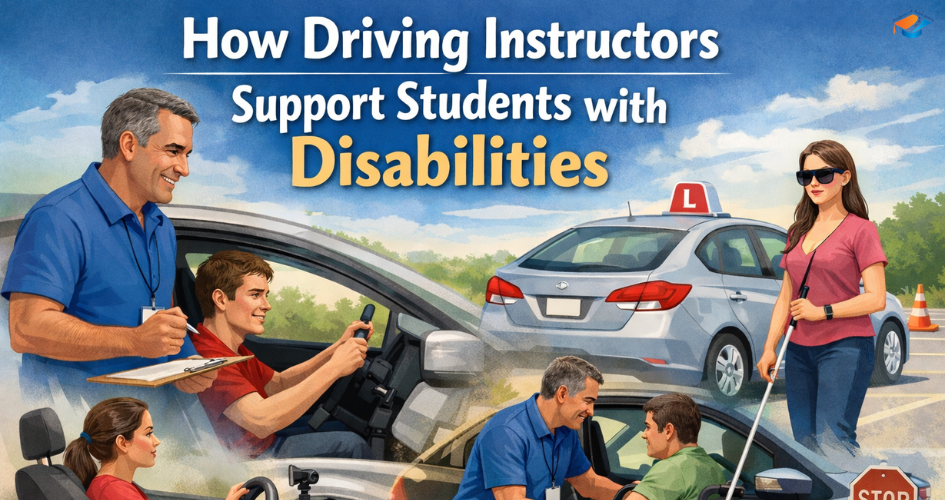
What This Article Covers
This article explores how driving instructors in NSW support learners with disabilities and help them become confident, independent, and safe drivers. It discusses how using adaptive teaching methods, modified vehicles, personalised support, and expert training that they receive from driving instructor courses like the TLI41225, helps them teach the students better.
How Driving Instructors Help Turn Barriers into Opportunities
Have you ever thought about how difficult it is for students with disabilities to learn to drive? Driving requires physical and mental control and is difficult for everyone. But for students with disabilities, it comes with additional challenges. Whether it's physical limitations, learning differences, or the need for modified vehicles, teaching them requires more attention and care than traditional driving lessons. This is where professional instructors trained through driving instructor course, like TLI41225, come in. Inclusive driving lessons require a lot of patience, specialised knowledge, and teaching strategies tailored to each student. Trained instructors know how to be patient and use their knowledge to give disabled students the chance to drive safely on Australian roads.
How Instructors Adapt to Every Learner
Every learner has their own learning style, especially students with additional needs. For driving instructors, this means adjusting their lesson structures, communication styles, teaching methods, and pace to suit the individual needs of their students. While some learners learn better with simple instructions and progressive lessons, others require visual cues, repetition, or alternative teaching methods to make complex driving concepts easier to understand. At the Academy of Road Safety, we offer different training programs for different cities, such as our Driving Instructor Course Sydney or Driving Instructor Course Melbourne, to teach instructors how to recognise different learning styles and adapt accordingly.
How Specially Adapted Vehicles Open the Road to More Learners
Another very important factor in providing inclusive training to learners is accessibility. With the latest technology, it’s now possible to make vehicles more accessible for drivers with special needs. So, many instructors also use vehicles equipped with adaptive features like hand controls, spinner knobs, or specialised seating arrangements. They teach their students how to transfer safely into the vehicle, use these modified features properly, and adjust controls to facilitate movement, even in real traffic environments. Learning with these modified vehicles allows students with physical disabilities to drive comfortably, safely, and confidently.
Lessons That Go Beyond Driving Skills
Driving instruction is not just about teaching vehicle control and road rules. It extends far beyond the time a driver spends on the road. Experienced driving instructors often help learners with disabilities on and off the road. Whether it’s preparing for tests, practising entry and exit techniques, parking safely, or managing fatigue during long drives, experienced instructors help disabled learners in various ways. They also teach learners handle practical tasks such as booking assessments, organising documents, or planning accessible routes. They prepare learners not just to pass a test, but to drive safely and confidently on the road.
The Impact of Specialist Training
Specialist training is very important for inclusive driver education. With professional driving instructor courses, instructors can learn about different disabilities and adjust their teaching and communication methods to suit each learner’s needs. Programs like TLI41225 teach instructors how to make learners with disabilities feel safe, respected, and included. Instructors learn how to structure lessons carefully to meet learners’ special needs, encourage them frequently, and ensure they don’t feel overwhelmed. With the right training and preparation, instructors can confidently support learners from diverse backgrounds.
Inclusive Driving Education Is Changing Lives
Driving is more than a skill; it’s a pathway to independence, opportunity, and confidence. By adapting lessons, modifying vehicles, and providing support beyond the wheel, driving instructors help students with disabilities overcome barriers and achieve meaningful milestones.
As the demand for inclusive driver education grows, professionally trained instructors are becoming more important than ever. If you’re an aspiring instructor passionate about making a real difference in people’s lives, consider starting your journey with the Academy of Road Safety. Enrol in our Driving Instructor Courses, like the TLI41225 qualification, and develop the skills needed to support diverse learners and help shape a more inclusive driving future.
Real Challenges Driving Instructors Face When Teaching Learners with Disabilities in Australia
Teaching learners with disabilities is one of the most rewarding aspects of being a professional driving instructor — but it also presents challenges that go far beyond what standard training prepares you for. Understanding these real-world difficulties is what separates a competent instructor from a truly exceptional one.
Managing Anxiety and Low Confidence
Many learners with disabilities — particularly those with autism spectrum disorder (ASD), ADHD, or acquired brain injury (ABI) — arrive at their first lesson carrying years of self-doubt. They may have been told driving isn't possible for them, or they may have had negative experiences in other learning environments. Instructors trained through programs like TLI41225 learn how to build a calm, structured environment from lesson one — using consistent routines, clear language, and genuine encouragement to rebuild a learner's belief in their own ability.
Communicating Across Different Learning Profiles
A learner with a hearing impairment needs instruction delivered differently from a learner with low vision or one with a cognitive processing difference. There is no single teaching script. Instructors must know when to switch from verbal instruction to demonstration, when to use visual guides or written cue cards, and when to simply slow down and allow more processing time without pressure.
Coordinating with Allied Health Professionals
In many cases, inclusive driver education in Australia involves working alongside occupational therapists (OTs) who conduct formal driving assessments. Instructors need to understand how to communicate with OTs, implement their recommendations into lesson plans, and adjust vehicle modifications based on evolving assessments. This collaborative approach is central to how disability-inclusive driving works under Australian road authority guidelines.
Navigating Licensing Requirements for Learners with Medical Conditions
Each state in Australia has its own licensing authority requirements for drivers with medical conditions or disabilities. In NSW, for example, learners may need to obtain medical clearance or a conditional licence before progressing. Instructors must be familiar with these frameworks to guide learners and their families through the process — so that no one is caught off guard by administrative barriers on the road to independence.
Knowing When to Pause or Restructure a Lesson
Unlike standard learners, students with disabilities may have days where fatigue, sensory sensitivity, or medication changes significantly affect their performance. Skilled instructors recognise the difference between a learner having a bad lesson and a learner who needs a break, a restructured approach, or a conversation before continuing. This judgment — knowing when to push forward and when to step back — is a mark of experience that only comes from specialised training and genuine commitment to the learner's wellbeing.
These challenges are not barriers to inclusive driving instruction — they are the reasons why professional, accredited training matters so much. The Academy of Road Safety's driving instructor programs are designed to equip you with the knowledge, empathy, and practical skills to meet every learner where they are.
Frequently Asked Questions
Q1. Can people with disabilities learn to drive in Australia?
A. Yes. Many individuals with physical or cognitive disabilities can learn to drive with the right training, adaptive vehicles, and supportive instruction tailored to their needs.
Q2. What vehicle modifications are used for learners with disabilities?
A. Common adaptations include hand controls, steering aids, spinner knobs, and specialised seating to improve accessibility and control.
Q3. Do driving instructors receive training to teach students with disabilities?
A. Yes. Accredited programs such as TLI41225 include guidance on inclusive teaching strategies and adapting lessons for diverse learners.
Q4. Is specialist instruction different from regular driving lessons?
A. The core skills remain the same, but lessons may be adjusted in pace, communication style, and vehicle setup to ensure safety and comfort.
Q5. How does inclusive driver training benefit road safety?
A. Inclusive training ensures all drivers develop strong awareness, confidence, and safe habits, contributing to safer roads for everyone.