What This Article Covers
In this article, we will discuss how instructors can adapt driving lessons for adults and returning drivers, from assessing existing skills to building confidence and safer decision-making.
Experience Changes the Way You Teach
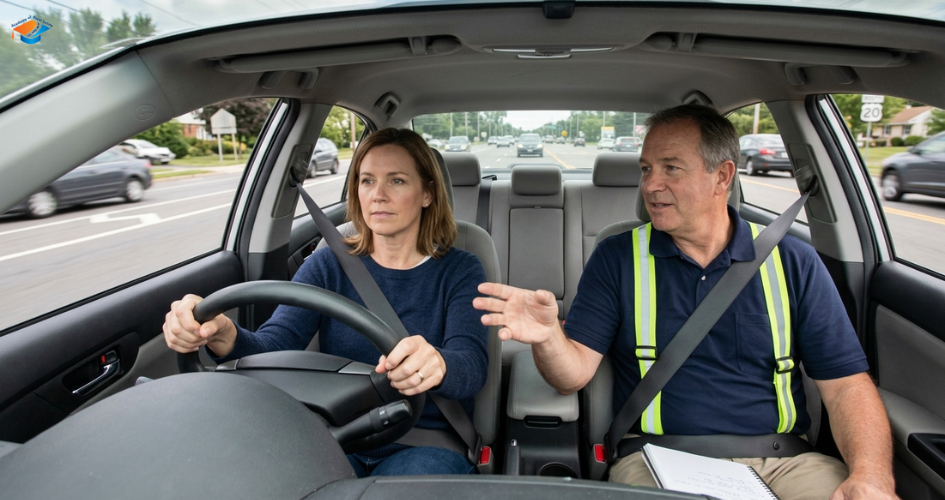
Teaching someone who has never driven before is very different from teaching someone who has been behind the wheel for years. An adult returning to driving may remember how to handle a car, but feel nervous in traffic after a long break. Another driver may be confident, yet have picked up habits that are no longer safe. Neither needs to be treated like a complete beginner. For an instructor, the first step is understanding the driver sitting beside you. Their previous experience, confidence, habits, and reasons for returning to driving should all shape the way you teach.
Start With an Assessment, Not a Lesson Plan
It can be tempting to arrive with a standard refresher lesson and work through the same exercises with every driver. A better approach is to first see what the driver can actually do. Observe how they position the vehicle, use their mirrors, respond to intersections, change lanes, judge gaps, and react to other road users. Ask about their driving history and how long they have been away from driving. You may find that one driver needs help with basic confidence, while another mainly needs to address a few specific habits. This initial assessment gives you something more useful than assumptions. It gives you a starting point.
Adapt Your Teaching to Their Experience
An experienced driver already has a mental picture of what driving involves. So, teaching them can be easier in some areas, but it can also make certain habits harder to change. For example, if a driver always does a particular manoeuvre in the same way, simply telling them to do it differently may not be enough. You also need to explain what you have observed, why the change matters, and then give them an opportunity to practise it. At the same time, avoid explaining every basic step they already understand. Good instruction should meet the driver at their current level rather than forcing them through a lesson designed for someone else.
Don't Confuse Confidence With Competence
It’s said that driving isn’t something you easily forget. So, you might notice a returning driver being confident right from the beginning, but it can go in either direction. Someone who has not driven for several years may know what to do but hesitate when traffic becomes busy. You need to expose them gradually to more demanding situations and reassure them that their confidence will catch up with their ability. On the other hand, you might also face drivers who are very comfortable behind the wheel but underestimate hazards or take unnecessary risks. In that situation, the instructor needs to challenge their decision-making without simply trying to knock their confidence. The goal is not to make drivers feel confident at any cost. It is to help them become confident because they can make safer decisions.
Look for Rusty Skills and Old Habits
There is a difference between a skill that has become rusty and a habit that has been reinforced over years. A returning driver might need practice with parking, merging, lane changes, or busy intersections simply because they have not done them recently. An experienced driver, meanwhile, might need to improve observation, positioning, following distance, or hazard awareness. Rather than trying to correct everything at once, focus on the issues that have the greatest effect on safe driving. Give the driver time to practise, provide specific feedback, and revisit the skill where needed.
Refresh Their Road Knowledge
A driver who has spent years away from the road may also have gaps in their knowledge. Road rules can change, and driving environments can look quite different from what they remember. An instructor should therefore be prepared to check what the driver knows and explain current requirements where necessary. This is another reason instructors need to keep their own knowledge current rather than relying solely on personal driving experience.
Teach Decision-Making, Not Just Vehicle Control
Once an adult driver is comfortable controlling the vehicle, the lesson should move beyond steering, braking, and gear changes. Help them read traffic, anticipate what other road users might do, identify hazards early, judge safe gaps, and make decisions without relying on constant prompts. These are the skills that matter when the instructor is no longer sitting beside them. This ability to adapt instruction to different drivers is an important part of professional training. A Driving Instructor Course, such as training aligned with TLI41225 Certificate IV in Motor Vehicle Driver Training, develops the teaching and road-safety skills instructors need to work with varied learner needs.
Know Where Your Role Ends
Instructors also need to recognise when a concern may go beyond driving instruction. Particularly with older drivers, difficulties on the road can sometimes relate to vision, physical ability, cognition, or other health factors. An instructor can observe driving performance and provide appropriate feedback, but should not attempt to diagnose an underlying condition. Knowing when another professional assessment may be appropriate is part of responsible instruction.
Teach the Driver in Front of You
Adults and returning drivers bring more than driving experience into a lesson. They bring habits, expectations, confidence levels, and sometimes a fair amount of apprehension. A good instructor takes the time to understand those differences and adapts accordingly. Whether you are considering a Driving Instructor Course in Sydney, learning how to assess and teach different types of drivers is an important part of becoming an effective instructor.
At AORS, the TLI41225 Certificate IV in Motor Vehicle Driver Training can help you build the professional knowledge and teaching skills needed to work with drivers at different stages of their driving journey. If you are serious about becoming a driving instructor, explore the course and take the first step towards learning how to teach more than just driving.
Frequently Asked Questions
Q1. How is teaching an adult driver different from teaching a new learner?
A: Adult and returning drivers often have previous driving experience, so instructors should first assess their existing skills, habits, confidence, and knowledge rather than treating them as complete beginners.
Q2. How can a driving instructor help a returning driver regain confidence?
A: An instructor can identify where the driver feels uncomfortable and gradually introduce more challenging situations while providing clear feedback and allowing time to practise.
Q3. Should experienced drivers be taught the same way as beginners?
A: Not necessarily. Experienced drivers may already have strong vehicle-control skills but could have outdated knowledge, rusty skills, or established habits that need attention. Instruction should be tailored to their individual needs.
Q4. What qualifications do you need to become a driving instructor in Australia?
A: Requirements vary between states and territories. TLI41225 Certificate IV in Motor Vehicle Driver Training is the current national qualification for motor vehicle driver training and may form part of the licensing requirements, depending on the jurisdiction.