What This Article Covers
In this article, we will explore practical ways driving instructors can teach speed awareness, help learners recognise changing speed zones, and develop safer speed management habits.
Are Your Learners Noticing Their Speed?
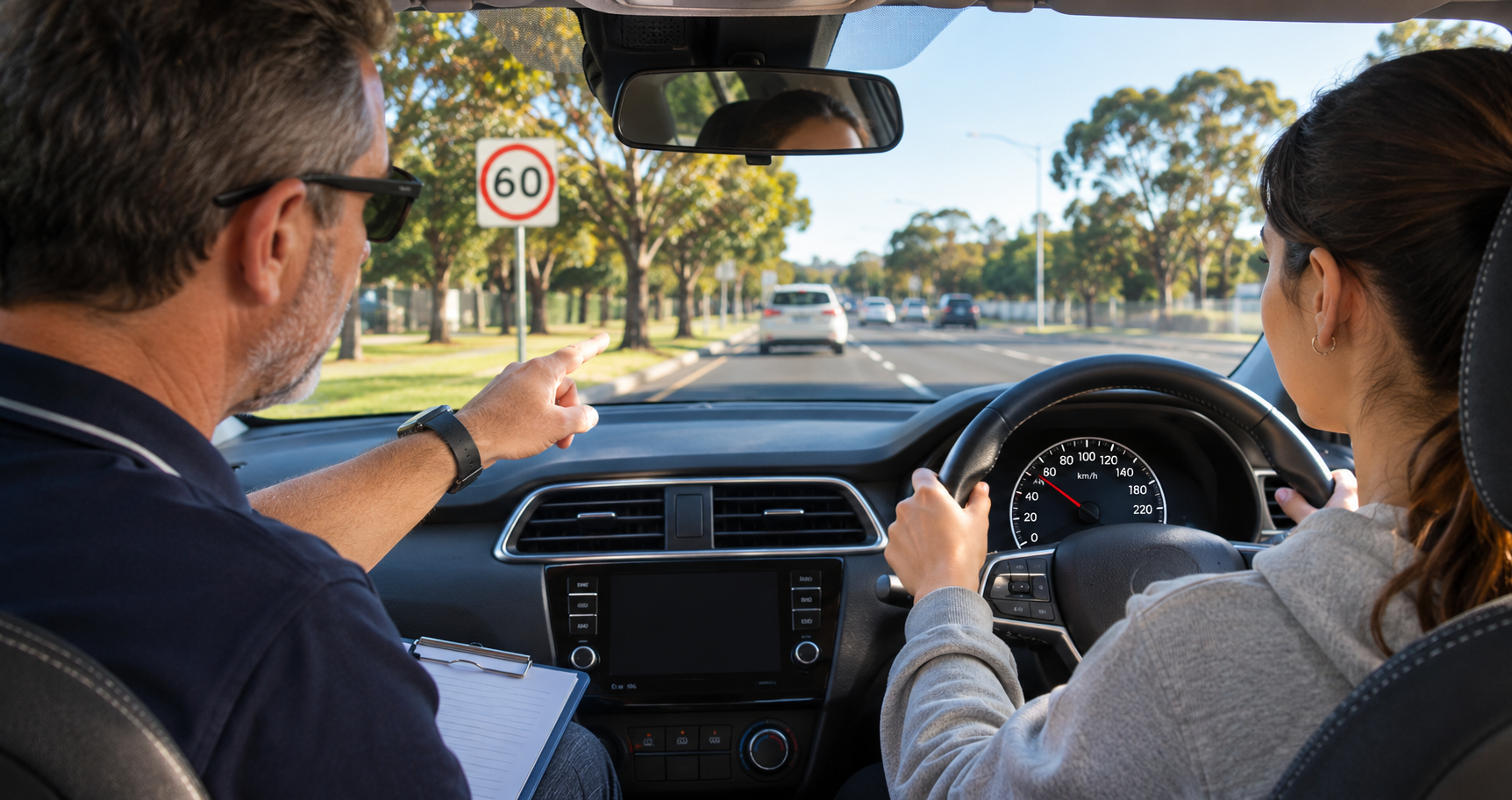
Imagine you’re with a learner driving along a familiar suburban road. The speed limit changes from 60 km/h to 40 km/h, but your learner doesn’t notice it quickly enough. As they noticed it late, they would brake abruptly and then turn to you for reassurance. The problem isn't necessarily that they don't know the speed limit. They haven't yet developed the habit of looking ahead and anticipating changes. A professionally trained instructor should be able to recognise this difference and help them bridge the gap. This is why Driving Instructor Course training should place proper emphasis on speed awareness. Learners need to understand what the signs mean, but they also need to recognise when a change is coming and respond safely. The recent Operation Furlong results in Victoria provide a timely reminder of why this matters.
What Operation Furlong's Results Tell Us
During Victoria Police's six-day Operation Furlong over the 2026 Melbourne Cup long weekend, officers detected 8,908 traffic offences. Of these, 3,893 were speeding offences, making up approximately 44% of the total. Speeding was the largest reported offence category during the operation. While enforcement figures do not explain why each driver was speeding, they give you a useful reason to revisit how learners understand and manage their speed. Some learners may struggle to notice changing speed limits, while others may become distracted by traffic or fail to check their speed regularly. These are habits you can address through consistent practice rather than waiting until a learner makes a mistake.
Teach Learners to Recognise Speed Signs and Zone Changes
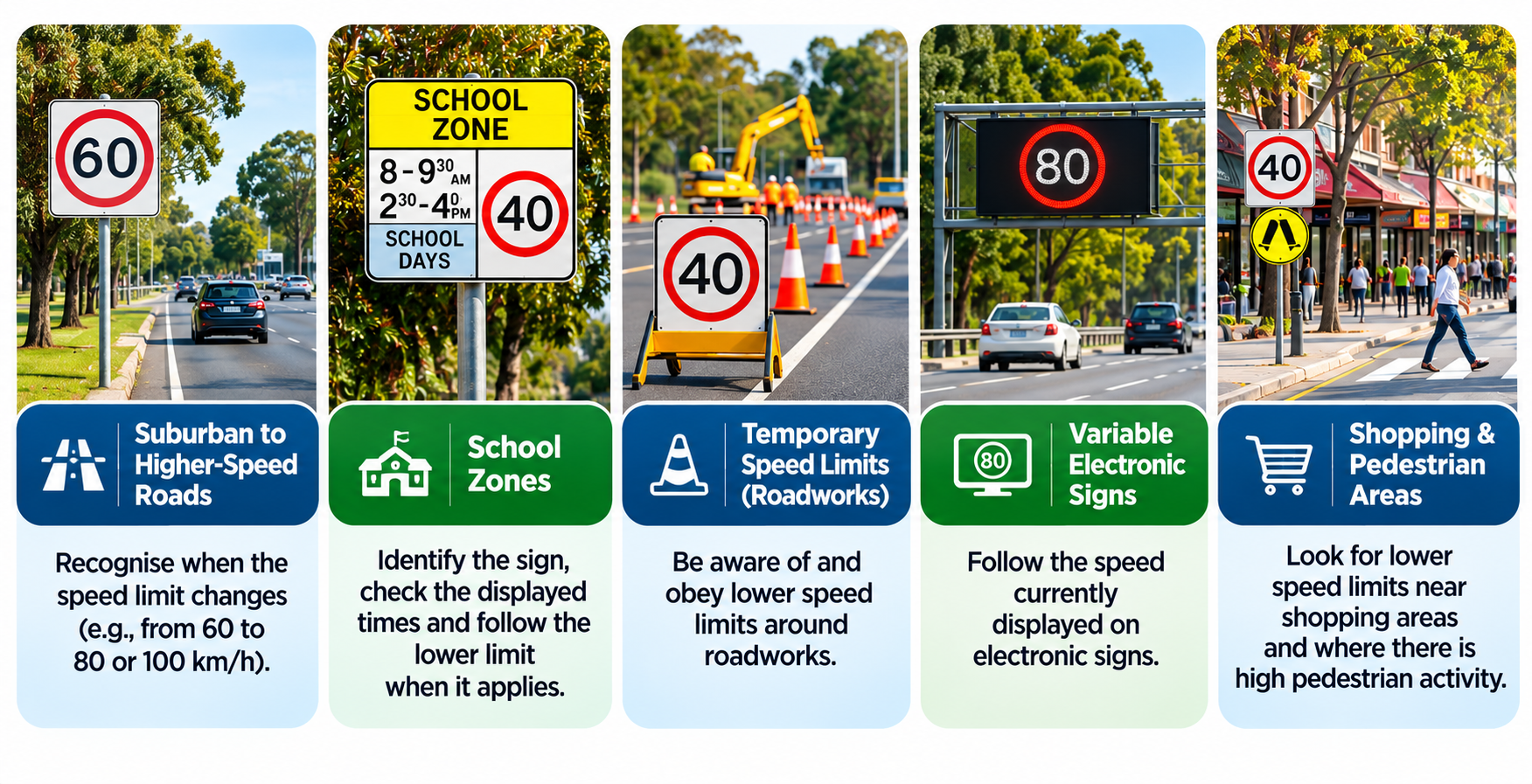
A learner should not have to wait until they are beside a speed sign to start thinking about their speed. You should encourage them to look further ahead and notice signs that indicate an upcoming change. Make them drive on familiar routes so that they can recognise:
-
Changes between suburban and higher-speed roads.
-
School zones and their displayed operating times.
-
Temporary speed limits around roadworks.
-
Variable electronic speed signs.
-
Lower speed limits near shopping areas and pedestrian activity.
For example, when approaching a Victorian school zone, ask them to identify the sign, check the displayed times, and prepare to follow the lower limit when it applies. This helps them connect what they see on the road with the decisions they need to make.
Make Speedometer Checks Part of the Lesson
Some learners become so focused on steering, mirrors, and surrounding traffic that they forget to monitor their speed. Others look at the speedometer too frequently and take their attention away from the road. You should help them find the right balance. Tell them to make their speedometer checks brief and at appropriate moments, while keeping their attention on the road ahead and surrounding traffic. You can also ask them to estimate their speed before checking the display. Monitoring speed while keeping track of surrounding traffic requires focus and responsible decision-making, two skills you need to develop throughout their training. Discussing the difference between their estimate and actual speed can help them become more aware of how the vehicle feels at different speeds. It will help them develop a consistent checking habit, instead of constantly watching the dashboard.
Practise Speed Adjustments on Familiar Routes
You can also start a practical exercise that can help learners put their knowledge into action. Choose a route with several clearly marked speed zones and ask them to identify an upcoming speed limit change. Have them explain what adjustment will be needed. You can study their answers, correct them where necessary, and observe whether they respond smoothly and at the appropriate point. Repeat this exercise across different speed zones. And when you cover a particular zone, discuss any missed signs or delayed reactions after the drive. Remind learners that they must be travelling at or below the applicable limit when entering the new speed zone. They should anticipate the change rather than brake suddenly at the sign. You can gradually introduce busier routes and more complex conditions as their skills improve.
Teach Learners to Adjust Speed to Road Conditions
Following the posted speed limit is essential, but it doesn't always mean that travelling at that speed is safe. Rain, poor visibility, heavy traffic, sharp bends, and pedestrian activity can all affect how fast you should travel. A driver may need to slow down even when there is no change to the posted limit. You should use these situations as examples to explain the difference between the legal speed limit and a safe speed for the conditions. Learners should understand that good speed management involves assessing what is happening around them, not simply following a number on a sign.
Use Commentary Driving and Lesson Debriefs
Getting learners to talk through what they see is one of the best ways to understand their thought process. Encourage them to call out upcoming speed signs, shifts in traffic, and how they plan to react before they even touch the brake or accelerator. Once the lesson is over, take a couple of minutes to chat through how it went. Highlight what they nailed, and gently point out where they hesitated. You can ask simple reflection questions about whether they noticed speed changes early enough and whether their speedometer checks were consistent. Set one clear speed-awareness goal for the next lesson. This keeps them from feeling overwhelmed and gives you an easy way to track their progress. You can keep your learners engaged through interactive driving lesson exercises that encourage learners to observe, explain, and apply what they have learnt.
Make Speed Awareness a Regular Part of Every Lesson
Good habits don’t develop overnight. Safe speed management comes from steady repetition, calm observation, and practical feedback on real roads. By weaving speed awareness into every session, you can give your learners the confidence to manage their speed naturally long after they pass their test.
If you're ready to build the skills needed to teach safer, more confident drivers, check out a Driving Instructor Course Sydney with the Academy of Road Safety. Get in touch with our team today to learn more about the TLI41225 Certificate IV in Motor Vehicle Driver Training and start your journey as a professional instructor.
Frequently Asked Questions
Q1. Why is speed awareness important for learner drivers?
A: Learners are often so focused on steering and gears that they miss what’s happening further up the road. Building strong speed awareness helps them spot changing zones early, keep a natural eye on their pace, and adapt smoothly to traffic, all of which keeps them much safer once they're driving solo.
Q2. How can driving instructors improve a learner's speed awareness?
A: Start on familiar, low-stress routes so they aren't overwhelmed. From there, get them calling out speed signs early, practising quick glances at the speedometer, and talking through their decisions out loud. A quick, constructive debrief at the end of each lesson also helps reinforce what they're doing well.
Q3. Should learners always aim to drive right on the posted speed limit?
A: No, not necessarily. It helps to remind learners that the sign shows the maximum legal speed in ideal conditions, not a target they have to hit. If it’s raining, visibility is poor, or they’re passing busy footpaths, slowing down below the limit is always the smarter, safer call.
Q4. What is commentary driving, and how does it help with speed awareness?
A: It’s simply having the learner narrate what they see and what they’re about to do while they drive. Speaking their thoughts out loud forces them to scan further ahead, spot speed changes sooner, and think through their reactions before making a move.